
How Haul Trucks Keep Mining Moving
September 3, 2025
Haul trucks are the heavy lifters of modern mining. Whether it’s transporting thousands of tons of ore per day or supporting the efficiency of an entire mine site, these massive machines play a critical role in keeping mining operations productive, safe, and profitable.
In this guide, we’ll explore what haul trucks are, how they work in mining environments, and why they’re an essential part of Canada’s resource economy from the oil sands of Alberta to the gold mines of British Columbia and beyond.
What Are Haul Trucks in Mining?
A haul truck is a type of off-highway, ultra-class vehicle specifically designed for heavy material transport across rugged terrain. Unlike road trucks, haul trucks are built for extreme loads, performance on grade, and constant operation in harsh, remote environments like surface mines and quarries.
Key features of mining haul trucks:
- Payload capacities from 100 to 400+ tons
- Durable frames designed for either soft or rocky , uneven terrain
- Advanced braking systems for steep grades
- Integrated fleet and health management systems
- Compatibility with autonomous or semi-autonomous technology
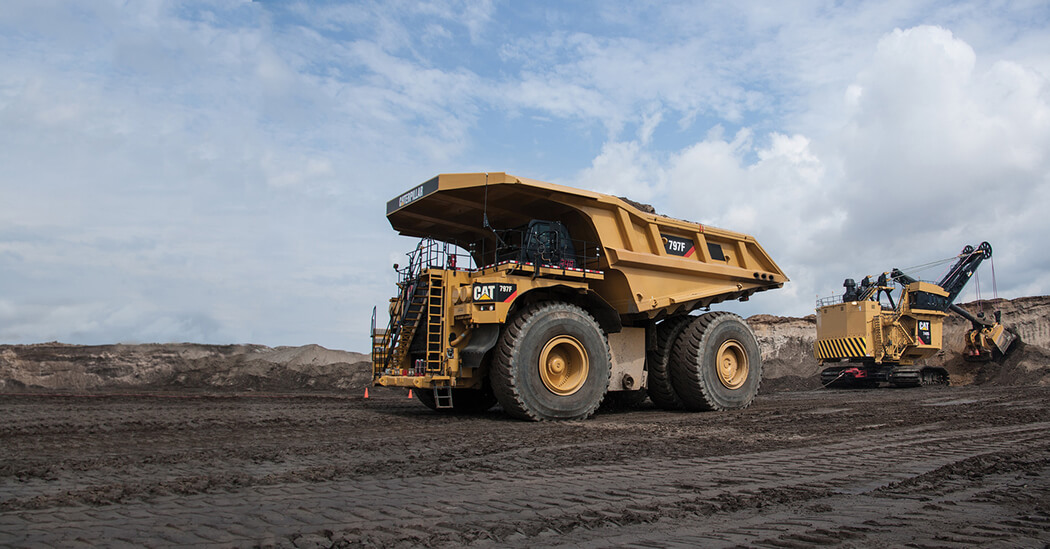
In mining, haul trucks typically transport ore, waste rock, or overburden between the pit and processing facilities, keeping the entire production chain moving.
Why Haul Trucks Are the Backbone of Mining
Mining operations depend on reliable, high-capacity hauling to move materials from where they're extracted to where they’re processed. Haul trucks ensure uninterrupted material flow across the site.
Load-Haul-Dump Cycles
Haul trucks work in tightly managed cycles:
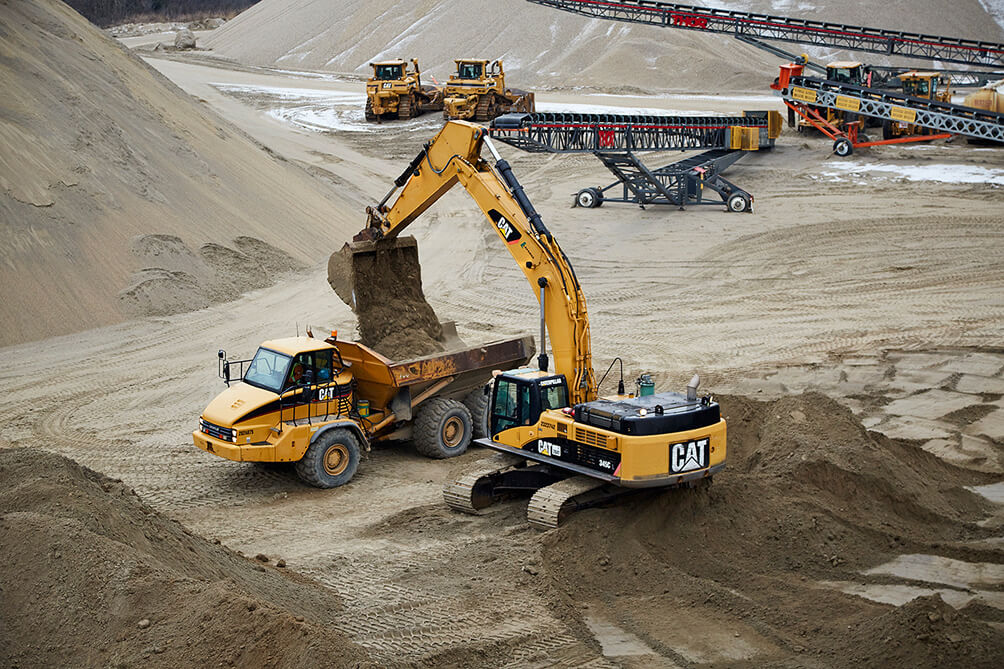
- Loading – Shovels, excavators or wheel loaders fill the truck’s bed or dump body.
- Hauling – The truck transports material over haul roads to a dump point.
- Dumping – Payloads are tipped into crushers, stockpiles, or waste dumps.
- Returning – The truck loops back for the next load.
These cycles repeat 24/7 in most surface mines, with minimal idle time. The more efficiently this cycle runs, the more profitable the operation.
Types of Haul Trucks in Canadian Mining
Mining sites in Canada use a variety of haul truck types depending on terrain, climate, and mine design.
Rigid-frame trucks
- Typical Use Case: Autonomous trucks
- Example: Cat® 793F, 797F
Articulated trucks
- Typical Use Case: Softer terrain, more flexibility (e.g. oil sands)
- Example: Cat® 745, 740 GC
Electric drive trucks
- Typical Use Case: Reduced emissions, high-efficiency hauling
- Example: Cat® 794 AC, 798 AC
Autonomous trucks
- Typical Use Case: Continuous, 24/7 hauling with fewer stoppages
- Example: Cat® Command for Hauling
The Role of Technology in Haul Truck Efficiency
Modern haul trucks aren’t just machines—they’re mobile data centres. Canadian mining companies are adopting smart technology to improve performance, reduce costs, and support sustainability.
Fleet Management Systems
- GPS tracking, onboard diagnostics, and real-time monitoring help:
- Reduce idle time
- Improve route efficiency
- Alert operators to mechanical issues before failure
Autonomous Haulage
- Canada is a leader in autonomous mining. Driverless haul trucks are already in use at some major sites, offering:
- 24/7 operation
- Improved safety in hazardous areas
- More consistent cycle times
Electrification & Sustainability
Hybrid and electric haul trucks help reduce carbon output, especially important for mines committed to ESG goals. Electrified models are becoming more popular across provinces like British Columbia, where environmental regulations are more stringent.
Challenges Haul Trucks Help Overcome in Canada
- Canadian mining presents unique challenges: freezing winters, steep terrain, remote access, and environmental regulations. Haul trucks are adapted to meet these demands:
- Cold-weather durability: Engines, hydraulics, and frames built for -40°C and below
- Traction & gradeability: Powerful drivetrains for hauling on slopes or through mud/snow
- Long life cycles: Some haul trucks operate for 180,000+ hours with proper maintenance
- Remote maintenance support: Telematics allow for diagnostics even in isolated regions
Haul Trucks vs. Other Mining Transport Methods
While conveyors and rail systems are sometimes used in large-scale operations, haul trucks remain the most flexible and scalable material transport method in open-pit mining.
Haul Trucks
- Pros: Flexible, mobile, scalable
- Cons: Fuel-intensive, dependent on roads
Conveyors
- Pros: Continuous transport, low operating cost
- Cons: High upfront cost, less flexible
Rail systems
- Pros: Efficient over long distances
- Cons: Fixed routes, limited by terrain
Keeping Haul Trucks Running: Service, Safety & Uptime
Downtime is expensive. That’s why haul truck fleets in Canada are supported by rigorous maintenance schedules and dealer-backed service networks like Finning.
Preventative Maintenance
Routine servicing is critical to minimise wear and detect early signs of component failure. This includes:
- Oil & filter changes
- Hydraulic checks
- Undercarriage inspections
- Tyre pressure & tread monitoring
Rebuild & Repair Services
When trucks reach the end of their first life cycle, many are rebuilt rather than retired—extending lifespan while reducing capital costs.
Safety Systems
Haul trucks can be equipped with the following:
- Collision avoidance systems
- Operator fatigue monitoring
- Emergency shut-offs
- Visibility aids like 360° cameras and radar
Why Choose Finning for Mining Haul Truck Solutions?
Finning is the world’s largest Cat® dealer, with a long-standing presence in Canada. We supply, service, and support Cat® haul trucks across every major mining region—from Saskatchewan’s potash mines to Alberta’s oil sands.
With Finning, you benefit from:
- Access to the full range of Cat haul trucks
- 24/7 field support and remote diagnostics
- Cat® Command autonomous solutions
- Extended warranty and financing options
- Trusted partnerships with Canada’s top mining companies
Final Thoughts: Powering Canadian Mining, One Truck Load at a Time
Haul trucks are more than just equipment—they're the foundation of efficient, scalable mining operations. As Canada continues to lead the global mining sector, these machines will remain central to achieving safer, smarter, and more sustainable extraction.
Whether you're expanding a fleet, transitioning to autonomy, or looking to optimise uptime, Finning can help you move more, faster, and with confidence.
FAQs About Mining Haul Trucks
What is a haul truck used for in mining?
In mining, a haul truck is used to transport large volumes of material—such as ore, waste rock, or overburden—from the excavation site to processing areas, waste dumps, or stockpiles. These trucks are the backbone of surface mining operations, supporting continuous production by keeping the load-haul-dump cycle in motion.
In Canada, haul trucks are essential across various mining types, including:
Oil sands (e.g. Alberta): hauling bitumen-rich ore
Metal, coal and mineral mines (e.g BC): transporting gold, copper, silver, zinc and molybdenum.
Coal and potash (e.g. Saskatchewan): moving overburden and raw product
Their high payload capacity and off-road durability make them ideal for harsh conditions and remote operations.
What’s the difference between rigid and articulated haul trucks?
The main difference lies in design and use case:
Rigid Haul Trucks
- Frame: Fixed (rigid) frame
- Terrain: Best on firm, graded surfaces
- Manoeuvrability: Less agile
- Payload Capacity: Higher (up to 400+ tons)
- Common Use: Open-pit mining
Articulated Haul Trucks
- Frame: Pivot point between cab and body
- Terrain: Ideal for rough, uneven, or muddy ground
- Manoeuvrability: Highly manoeuvrable
- Payload Capacity: Lower (up to ~45 tons)
- Common Use: Smaller or variable terrain sites
Are haul trucks used in underground mining?
Typically, no—the haul trucks used in surface mining are far too large for underground tunnels. Instead, underground mines use smaller, purpose-built vehicles like:
Underground dump trucks (also called LHDs or “load-haul-dump” machines)
Shuttle cars or low-profile trucks
These machines are compact, highly manoeuvrable, and built to work in confined spaces with low ceilings. However, the principle of hauling remains the same move material efficiently from point of extraction to a shaft, conveyor, or skip hoist for surface transport.
How are haul trucks maintained in extreme cold weather?
In Canadian mining regions where temperatures can drop below -40°C, haul trucks require specialised cold-weather maintenance to ensure performance and safety. This includes:
- Cold-start systems: Block heaters, fuel warmers, and ether injection to help start engines in sub-zero conditions
- Winterised fluids: Using low-viscosity oils and antifreeze rated for extreme cold
- Heated cabs and components: Operator comfort and safety, plus functioning hydraulics and air brakes
- Frequent inspections: Daily checks for frozen lines, brittle hoses, and worn tyres
- Scheduled warm-ups: Idle or cycle machines to prevent sudden shock to engines and hydraulic systems
Proper winter maintenance practices helps prevent costly breakdowns and ensures maximum uptime in Canada’s most demanding mining environments.
Finning is the world's largest Caterpillar dealer, selling, renting and providing parts and service for equipment and engines to customers across diverse industries, including mining, construction, petroleum, forestry and a wide range of power systems applications. We operate in Western Canada, South America, and UK and Ireland.